Request Form
Emergency Case
Emergency hair loss care may be needed if you have had a blow to the face, lost a filling, or cracked a tooth.
- 0329-0011336
0327-0011335 - info@dotclinics.pk
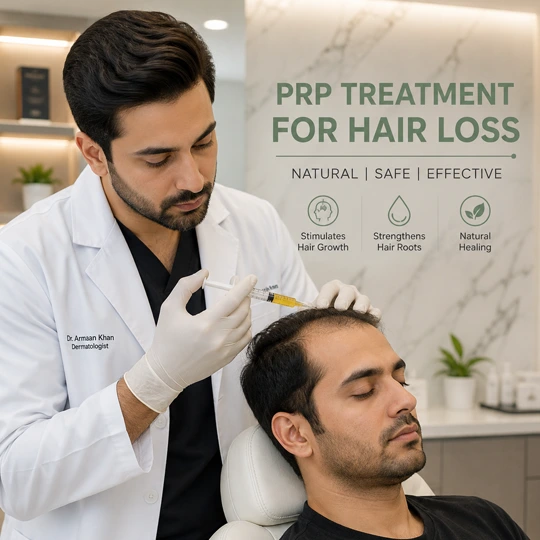
PRP Treatment for Hair Loss in Lahore
Pakistan's Trusted Hair Transplant Clinic
If you are losing hair and feel like nothing is working, you are not alone. Thousands of men and women in Pakistan go through the same thing every year, watching their hairline recede or their part grow wider, not knowing where to turn. PRP hair treatment (which stands for Platelet-Rich Plasma) is one of the most effective non-surgical options available today to slow down hair loss and bring back thicker, healthier hair. It uses your own blood, no chemicals, no implants, to wake up hair follicles that have become weak or inactive. At Hair Transplant Clinic Lahore, our doctor Dr. Hamza Ahmad has performed this treatment on hundreds of patients, both men and women, and the results speak for themselves. Whether you have early thinning, a receding hairline, or significant hair fall, this page will explain everything you need to know about PRP for hair loss, how it works, what to expect, how much it costs in Pakistan, and whether it is right for you.
Successful Procedures
Success Rate
Years Experience

What Is PRP?
PRP stands for Platelet-Rich Plasma. Your blood contains several components, red cells, white cells, and a liquid portion called plasma. Plasma carries tiny particles called platelets, which are best known for helping your blood clot when you get a cut. But platelets do much more than that. They contain powerful proteins called growth factors that tell your body to repair and regenerate tissue.
In a PRP hair treatment, we take a small amount of your blood, spin it in a machine called a centrifuge to separate and concentrate the platelets, then inject that concentrated platelet-rich plasma directly into the areas of your scalp where hair is thinning or gone.
These injections deliver a high dose of growth factors right where your hair follicles need it most. The growth factors stimulate blood flow to the scalp, reduce inflammation around the follicles, and push sleeping hair follicles back into an active growth phase. The result: less hair fall, stronger existing hair, and, in many patients — new hair growth in areas that had thinned significantly.
Think of it this way: your hair follicles are like plants. PRP is like adding rich fertiliser directly to the roots. It does not create hair where there are no follicles at all, but it can revive follicles that are still there but have gone dormant due to stress, hormones, or nutritional deficiency.
schedule a visitHow Does PRP Hair Treatment Work? (Step by Step)
The entire session takes about 60 to 90 minutes and is done right here at our clinic in Lahore. Here is exactly what happens:
1. Blood Draw
We draw a small amount of blood from your arm, similar to a routine blood test. Most patients say it feels no different from a regular checkup.
2. Centrifuge Processing
Your blood sample is placed in a medical centrifuge, which spins at high speed for about 10 minutes. This separates your blood into its three layers: red blood cells (at the bottom), platelet-poor plasma (in the middle), and platelet-rich plasma (at the top). We extract the top layer, the PRP, which now contains a concentration of platelets and growth factors many times higher than in your normal blood.
3. Scalp Preparation
We clean your scalp thoroughly. A topical numbing cream is applied to make the injections comfortable. Most patients experience only mild pressure or a light tingling sensation during the injections, not pain.
4. PRP Injections into the Scalp
Using a very fine needle, the PRP is injected in small amounts across the thinning areas of your scalp. These are shallow injections, placed just beneath the surface of the scalp where the hair follicles sit. The number of injection points depends on the size of the treatment area.
5. No Downtime
Once the injections are complete, you are free to go home. There is no surgery, no stitches, no hospital stay. Most patients return to normal activity the same day or the following day.
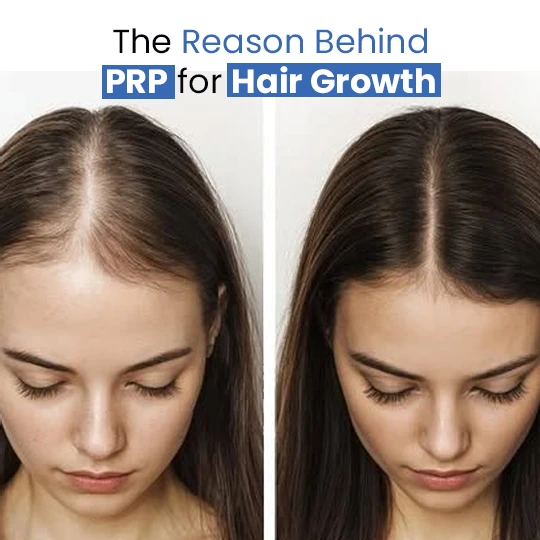
The Reason Behind PRP for Hair Growth
For anyone who wants to understand why this works, here is the biology in plain language.
Hair grows in cycles. Each follicle goes through three phases: the anagen phase (active growth), the catagen phase (transition), and the telogen phase (resting/shedding). In people experiencing hair loss, especially androgenetic alopecia, which is the medical name for male and female pattern baldness, the anagen phase shortens and follicles spend more time in the resting phase. Over time, follicles shrink and eventually stop producing visible hair.
PRP contains several growth factors that directly target this problem. Epidermal Growth Factor (EGF) stimulates cell multiplication in the hair follicle. Vascular Endothelial Growth Factor (VEGF) improves blood supply to the follicle, which means more oxygen and nutrients reach the roots. Fibroblast Growth Factor (FGF) promotes new follicle development and extends the anagen (growth) phase. Together, these proteins signal dormant follicles to become active again, produce thicker hair shafts, and extend the period of growth before shedding.
Multiple published medical studies have shown that PRP therapy meaningfully reduces hair shedding and increases hair density in patients with androgenetic alopecia. One study found that nine out of eleven patients showed significant hair growth after PRP treatment, with a patient satisfaction score of 7 out of 10. Research has also shown promising results for PRP in treating alopecia areata, an autoimmune condition where the body attacks its own hair follicles.
Who Is a Good Candidate for PRP Hair Treatment?
PRP works best for certain types of hair loss. Here is a clear guide to help you understand if it is right for you.
PRP is most effective for:
- Early to moderate hair thinning (you still have follicles in the treated area, even if they are weak)
- Male pattern baldness (receding hairline, thinning crown)
- Female pattern hair loss (widening part, overall thinning without total bald patches)
- Alopecia areata (patchy hair loss caused by an autoimmune response)
- Hair thinning after stress, illness, or hormonal changes (postpartum hair loss, thyroid-related loss)
- Patients who want to slow down hair loss without surgery
- Patients who have had a hair transplant and want to support graft survival and overall scalp health
PRP is less effective or not recommended if:
- You have complete baldness with no remaining follicles in an area (a hair transplant would be more appropriate)
- You have a blood disorder or are on blood-thinning medication
- You have active scalp infection or skin conditions like psoriasis in the treatment area
- You are pregnant or breastfeeding
- You have very low platelet counts
If you are unsure, the best step is to book a consultation with Dr. Hamza Ahmad. He will examine your scalp, review your hair loss pattern, and tell you honestly whether PRP is the right treatment for you, or whether another option would serve you better.
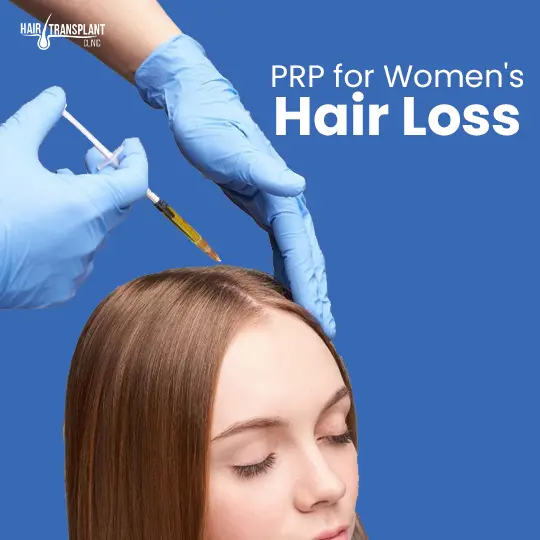
PRP for Women's Hair Loss
Female hair loss is a deeply personal concern, and in Pakistan it is often under-discussed. Women lose hair for many reasons: hormonal shifts after pregnancy, menopause, PCOS (polycystic ovary syndrome), iron deficiency, thyroid problems, or simply genetic pattern hair loss.
PRP hair treatment for women is just as effective as it is for men. In fact, research shows particularly good outcomes for women with female pattern hair loss, where the thinning is diffuse across the scalp rather than in one concentrated area. Women with postpartum hair loss, which can be severe in the months following childbirth, often see excellent results with PRP, as their follicles are still intact and simply need stimulation to return to their normal growth cycle.
At our clinic in Lahore, we have treated many women experiencing hair thinning and our approach is always sensitive, private, and personalised. A female coordinator is available if you prefer.
PRP for Hairline Restoration
If your hairline has been receding — whether along the temples, the front, or the top of the scalp, PRP injections for the hairline can help slow that recession and, in early stages, encourage some regrowth. PRP for the hairline is most effective when some follicles are still present but have become miniaturised. Once the hairline is completely gone, a hair transplant combined with PRP gives much better results than PRP alone.
For many of our patients, we recommend starting with PRP to stabilise the hairline, then planning a hair transplant procedure once the loss has been controlled.
PRP and Microneedling for Hair Loss
One of the treatments our competitors rarely discuss in depth is combining PRP with microneedling, and it is one of the most powerful combinations available for hair restoration.
Microneedling uses a device with very fine needles to create tiny controlled punctures in the scalp. These micro-channels serve two purposes: they trigger your scalp's own healing response (which releases additional growth factors), and they dramatically improve absorption of the PRP that is applied immediately after. The result is that PRP penetrates deeper and reaches more follicles than injection alone.
Several clinical studies have found that PRP combined with microneedling produces better hair density improvement than PRP alone. At Hair Transplant Clinic Lahore, we offer this combined protocol for patients who want maximum results from their PRP treatment.
PRP vs PRF, What Is the Difference?
You may have heard of PRF injections for hair loss as a newer alternative. PRF stands for Platelet-Rich Fibrin. It is processed differently from PRP, blood is spun at a lower speed without the anticoagulants used in PRP preparation. This creates a fibrin matrix (a natural scaffolding) that holds the growth factors together and releases them slowly over days and weeks rather than all at once.
The potential advantage of PRF is a more sustained release of growth factors over time. Early research is promising, and some specialists believe PRF may produce even better outcomes than standard PRP for certain patients. At our clinic, we stay current with the latest techniques. During your consultation, Dr. Hamza Ahmad can advise you on whether PRP or PRF is more suitable for your specific situation.
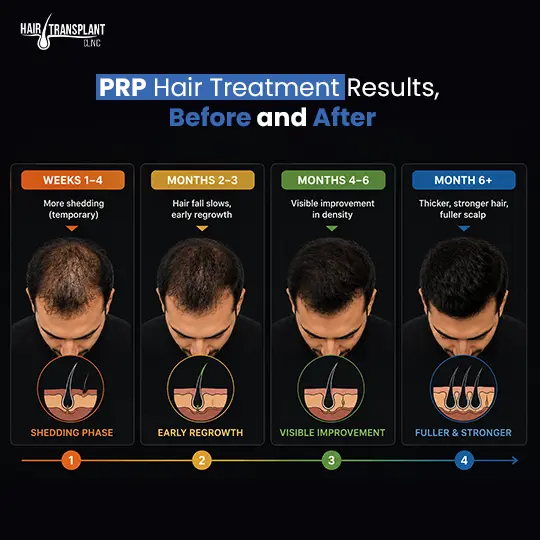
PRP Hair Treatment Results, Before and After
Results from PRP hair treatment vary between patients, and it is important to have realistic expectations. Here is an honest overview of what most patients experience:
Timeline:
- Weeks 1–4: Initial shedding may temporarily increase as dormant follicles cycle out before new growth begins.
- Months 2–3: Hair fall usually begins to slow noticeably, and some patients may see early signs of regrowth.
- Months 4–6: Visible improvement in hair density and thickness becomes noticeable in most patients.
- Month 6 Onwards: Results become more apparent as hair grows thicker, stronger, and the scalp appears fuller.
How long do results last? PRP is not a permanent solution on its own. Results typically last between 12 and 18 months with an initial course of three sessions. Maintenance sessions every 6 to 12 months help sustain the benefits. Many of our patients choose to continue with one or two PRP sessions per year as ongoing maintenance, combined with recommended hair care and medication where appropriate.
Individual results depend on the severity of hair loss, age, overall health, and consistency with the treatment plan.
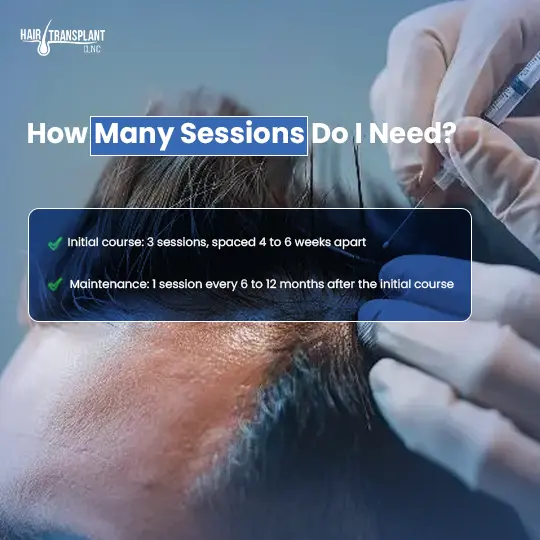
How Many Sessions Do I Need?
The standard PRP protocol at our clinic follows this structure:
Initial course: 3 sessions, spaced 4 to 6 weeks apart
Maintenance: 1 session every 6 to 12 months after the initial course
Some patients with more advanced hair loss may benefit from 4 initial sessions. During your consultation, Dr. Hamza Ahmad will design a personalised plan based on your hair loss pattern and goals.
Not Sure If You Qualify?
Book a free, no-obligation consultation at our Lahore clinic. Our hair transplant doctor will assess your hair loss grade using the Norwood scale and tell you exactly what is achievable for your specific case.
You will receive a personalised treatment plan with graft estimates, technique recommendation, and transparent pricing — all at no cost.
Book Free ConsultationPRP Hair Treatment Cost in Pakistan
One of the most common questions we receive is about the cost. PRP hair treatment price in Pakistan is significantly more affordable than in Western countries, where a single session can cost between $500 and $1,500 (around PKR 140,000 to PKR 420,000 at current rates).
At Hair Transplant Clinic Lahore, our PRP hair treatment pricing is designed to be accessible for Pakistani patients without compromising on the quality of equipment, technique, or doctor expertise.
For current PRP hair treatment cost in Lahore, please contact our clinic directly or book a free consultation. Pricing depends on the size of the treatment area and whether PRP is combined with microneedling or other supportive treatments. We also offer package deals for patients who book their full initial course of three sessions together, which provides a meaningful saving.
We believe cost should never be a barrier to treating hair loss effectively, which is why we offer flexible payment plans. Our team is happy to discuss options with you during your consultation.
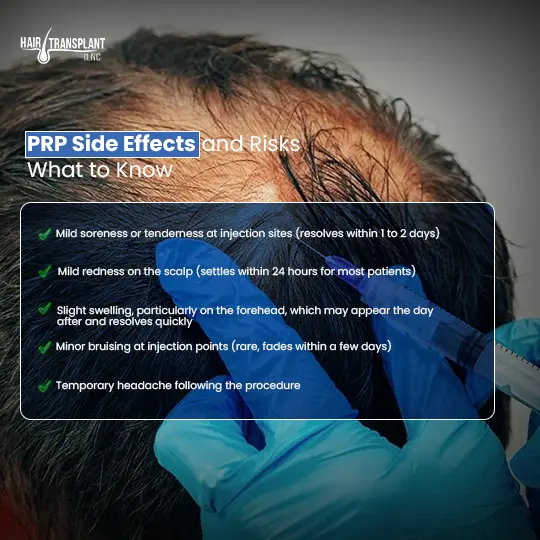
PRP Side Effects and Risks What to Know
PRP is considered one of the safest hair restoration treatments available because it uses your own blood, there is no risk of allergic reaction to the PRP itself. However, as with any injection-based treatment, there are some minor risks and side effects to be aware of.
Common and temporary side effects:
- Mild soreness or tenderness at injection sites (resolves within 1 to 2 days)
- Mild redness on the scalp (settles within 24 hours for most patients)
- Slight swelling, particularly on the forehead, which may appear the day after and resolves quickly
- Minor bruising at injection points (rare, fades within a few days)
- Temporary headache following the procedure
PRP for Alopecia Areata
Alopecia areata is a condition where the immune system mistakenly attacks hair follicles, causing patchy hair loss on the scalp and sometimes the body. It affects both men and women and can be unpredictable, patches may come and go, or progress to more extensive loss.
PRP has shown promising results in treating alopecia areata. The growth factors in platelet-rich plasma help reduce the localised inflammation around the follicle and stimulate regrowth in affected patches. Multiple studies have reported meaningful hair regrowth in alopecia areata patients following PRP therapy. Results are not guaranteed in every patient, and the underlying autoimmune trigger must also be addressed — but for many patients, PRP offers a drug-free, low-risk option for stimulating recovery.
If you have alopecia areata and are looking for treatment in Lahore, our team has experience managing this condition and can create a personalised treatment plan.
Why Choose Hair Transplant Clinic for PRP Treatment?
There are many clinics offering PRP in Lahore and across Pakistan. Here is what makes our approach different:
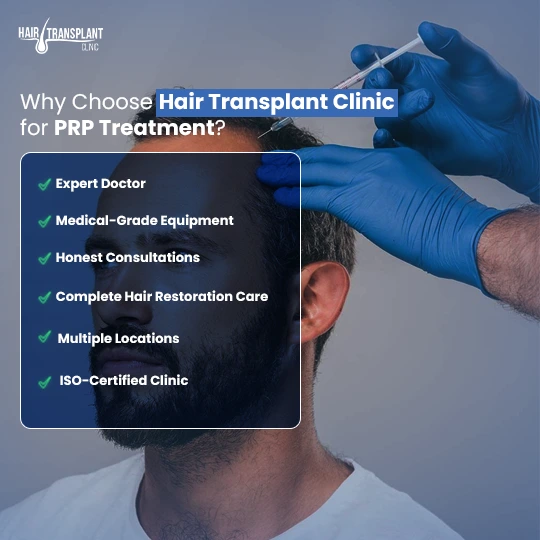
- Expert Doctor: All PRP treatments are performed under the supervision of Dr. Hamza Ahmad, a certified plastic surgeon experienced in hair restoration procedures.
- Medical-Grade Equipment: We use certified centrifuge machines and sterile PRP kits to ensure high-quality platelet-rich plasma preparation.
- Honest Consultations: We only recommend PRP if it is the right treatment for your specific type and stage of hair loss.
- Complete Hair Restoration Care: Our clinic provides PRP alongside FUE, DHI, medication management, and long-term follow-up support.
- Multiple Locations: We serve patients in Lahore, Karachi, Islamabad, and Multan, with our Lahore clinic located in Johar Town.
- ISO-Certified Clinic: Our clinic follows strict international standards for hygiene, sterilisation, and patient safety.
Common Questions About PRP for Hair Loss
What does PRP stand for?
PRP stands for Platelet-Rich Plasma. It is a concentrated portion of your own blood that contains a high level of platelets and growth factors.
Does PRP regrow the hairline?
PRP can stimulate regrowth along a receding hairline if follicles are still present in the area, even in a weakened or dormant state. For hairlines that have fully receded with no remaining follicles, a hair transplant is a better solution. PRP can then be used alongside the transplant to support recovery and density.
Does scalp treatment help hair growth?
Yes — scalp health is directly linked to hair health. PRP is one of the best scalp therapy treatments because it works at the follicle level, improving blood supply and cellular activity right where hair grows.
Is PRP effective for hair loss?
Yes, it is effective — particularly for androgenetic alopecia and early-to-moderate hair loss. It is not a cure, and it works best as part of a broader hair restoration plan that may include medications like minoxidil, good nutrition, and (where indicated) a hair transplant. Patients with very advanced baldness and no remaining follicles will not benefit from PRP alone.
Why no caffeine after PRP injections?
Caffeine causes blood vessels to constrict. After PRP, you want maximum blood flow to the scalp to help the growth factors absorb and the follicles respond. Avoiding caffeine for 24 to 48 hours after your session helps keep circulation open and active.
How long after PRP can I take ibuprofen (Advil)?
Wait at least 5 to 7 days before taking non-steroidal anti-inflammatory drugs (NSAIDs) like ibuprofen after a PRP session. NSAIDs reduce inflammation, but the mild inflammatory response after PRP is actually part of how the treatment works. For pain relief if needed, paracetamol (Panadol) is a better choice immediately after PRP.
Can I drink alcohol before PRP injections?
Avoid alcohol for at least 24 hours before your PRP session. Alcohol thins the blood, affects platelet function, and can reduce the quality of the PRP concentrate produced. It can also increase bruising after the injections.
How soon can I take multivitamins after PRP?
Standard multivitamins are generally safe to take the day after PRP. The ones to be cautious about are high-dose supplements like fish oil, vitamin E, and flaxseed oil, which have blood-thinning effects. These are better paused for 3 to 5 days before and after each session.
Is PRP treatment good for hair?
Yes. PRP is one of the most well-researched non-surgical hair rejuvenation treatments available. It is used by hair restoration specialists worldwide as both a standalone treatment and as a complement to surgical procedures.
What are the alternatives to PRP for hair loss?
Other hair loss treatments include minoxidil (topical), finasteride (oral medication for men), low-level laser therapy, exosome therapy, and surgical hair transplantation (FUE or DHI). During your consultation, the most suitable treatment options will be discussed based on your condition and goals.
Start Your Hair Restoration Journey Today
Book your free consultation at our hair transplant clinic in Lahore or Multan. Our specialists will assess your hair loss, explain the right technique for you, and give you a clear, honest picture of what to expect, at no cost.
Book Free ConsultationServing patients across Pakistan - Hair Transplant Clinic Lahore. Visit hairtransplantclinic.pk for appointments.

Our Contacts
- 85-R1, Ground Floor, Phase 2, Johar Town, Lahore
Get directions on the map - +92-329-001-1336
,
(24/7 General inquiry) - info@hairtransplantclinic.pk
Why Hair Transplant Clinic?
Hair Transplant Clinic is Pakistan’s largest hair loss treatment center, and proud of delivering the best
results as promised!
We bring you reliable alternatives to the scary cosmetic surgeries.